
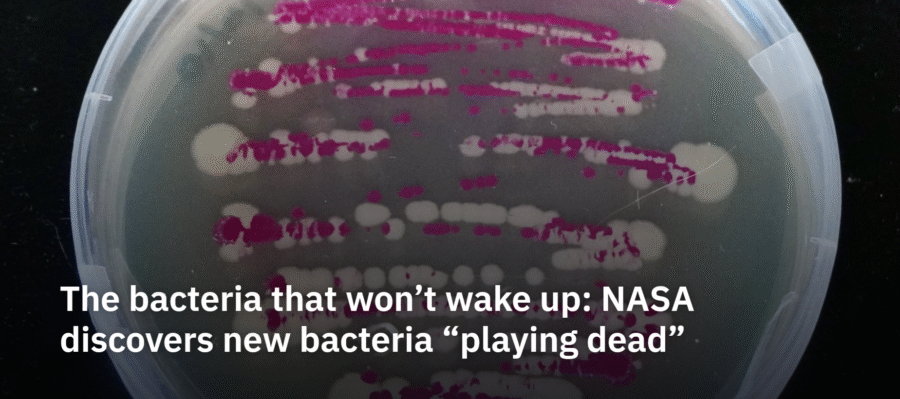
New research conducted on a NASA-discovered bacterium shows the microbe is capable of entering an extreme dormant state, essentially “playing dead” to survive in some of the cleanest environments on Earth.
The finding could potentially reshape how scientists think about microbial survival on spacecraft and the challenges of preventing contamination during missions to space. Preventing contamination matters because it helps keep space missions safe, while ensuring that any signs of life spotted elsewhere in the Solar System can be trusted.
“It shows that some microbes can enter ultra-low metabolic states that let them survive extremely austere environments, including clean rooms that naturally select for the hardiest organisms,” said Nils Averesch, Ph.D., an assistant professor in the University of Florida’s Department of Microbiology and Cell Science and a member of the Astraeus Space Institute.“ The fact that this bacterium can intentionally suspend its metabolism makes survival on spacecraft surfaces or during deep-space cruise more plausible than previously assumed.”